

Start Your U.S. LLC From Anywhere
$399 one-time
- One-time payment
- All registration fees included
- Money-back guarantee
SEE DETAILS →
If you’re a international founder setting up a U.S. LLC, opening a U.S. business bank account can be one of the biggest hurdles in getting your business operational.
This is especially true for founders from countries with stricter approval requirements.
Banks and fintechs have their own KYC and AML requirements, and your country of residence, business model, ownership structure, and expected activity can all affect your application.
The good news is that you don’t necessarily need to travel to the U.S. to open a U.S. business bank account.
This is especially true for founders from countries with stricter approval requirements.
Banks and fintechs have their own KYC and AML requirements, and your country of residence, business model, ownership structure, and expected activity can all affect your application.
The good news is that you don’t necessarily need to travel to the U.S. to open a U.S. business bank account.
Why Does U.S. Banking Matter?
A U.S. business bank account will allow you to:
- Receive USD payments from U.S. clients
- Receive payouts in USD
- Pay U.S. vendors and contractors
- Separate business and personal finances
- Connect payment processors like Stripe
For many international founders, access to U.S. banking is the step that turns a newly formed LLC into an operational business.
What Are Your Banking Options?
There are two main options: traditional brick-and-mortar banks and fintechs.
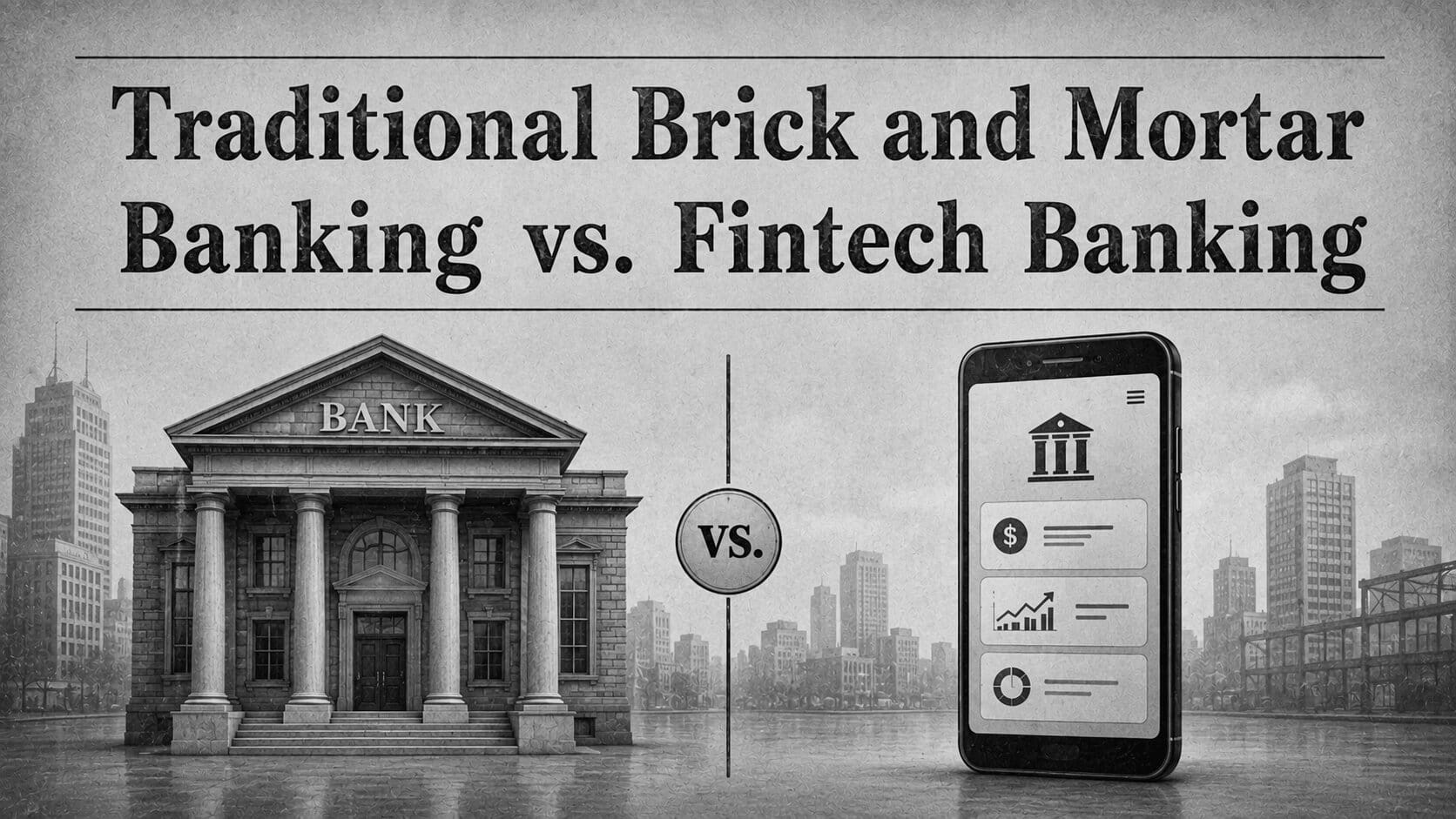
Traditional banks can offer more extensive banking services, but non-U.S. residents will often need to visit a branch in person and meet more demanding address and documentation requirements.
Fintechs (financial technology companies that partner with brick and mortar banks) can be a much easier and faster way to get access to U.S. banking remotely.
They generally have simpler onboarding processes and are designed around online applications. However, they still conduct KYC and AML reviews, and approval is never guaranteed.
For most remote international founders, fintechs are an ideal way to get operational as quickly as possible and without a visit to the U.S.
Fintechs (financial technology companies that partner with brick and mortar banks) can be a much easier and faster way to get access to U.S. banking remotely.
They generally have simpler onboarding processes and are designed around online applications. However, they still conduct KYC and AML reviews, and approval is never guaranteed.
For most remote international founders, fintechs are an ideal way to get operational as quickly as possible and without a visit to the U.S.
How Do You Choose the Right Platform?
Your best option depends heavily on where you live and what you need from your account.
Mercury
If your country is eligible, Mercury is often the first option worth considering. It offers a broad range of business banking features, including free ACH and USD wire transfers, business loans, and credit cards. Mercury is also designed specifically for U.S. companies founded by people outside the U.S.
Mercury prohibited countries list.
Mercury prohibited countries list.
Grey
Grey can be particularly useful for founders from countries where U.S. banking approval is more difficult, as it was built specifically to serve founders in emerging markets. It offers accounts in USD, GBP, and EUR, along with virtual prepaid cards.
Grey supported countries list.
Grey supported countries list.
Wise
Wise can be useful as a multi-currency intermediary between your U.S. business account and home-country bank, offering competitive exchange rates when moving money between currencies. It can also be useful for paying international contractors, particularly when they also use Wise. Wise offers business features as well, making it a good backup option.
Wise supported countries list.
Wise supported countries list.
What Do You Need to Apply?
Most providers will want some combination of:
- LLC formation documents (Articles of Organization)
- EIN Documentation (CP 575 or LTR 147C)
- Passport or government-issued ID
- Ownership information
- Website or explanation of your business
- Expected transactions and source of funds
- U.S. business address
- Proof of operational address
Make sure the information is consistent across every document and application.
How to Maximize Your Approval Chances
There’s plenty of advice online about how to “optimize” your application to make yourself look more attractive to a bank. Don’t try to game the system.
Banks conduct ongoing KYC and AML checks, so information that doesn’t accurately reflect your business can eventually create problems, including account restrictions or closure.
Your goal should be to find a long-term banking partner that genuinely fits your business, and that starts with being transparent and complying with the bank’s policies.
Consider the following when applying for an account:
Banks conduct ongoing KYC and AML checks, so information that doesn’t accurately reflect your business can eventually create problems, including account restrictions or closure.
Your goal should be to find a long-term banking partner that genuinely fits your business, and that starts with being transparent and complying with the bank’s policies.
Consider the following when applying for an account:
- Apply to a provider you're eligible for: Make sure they support businesses and founders from your country.
- Be 100% transparent: Provide accurate information about your business, ownership, address, activities, and expected transactions. If you're not initially approved, being transparent gives you the opportunity to work with the bank and explore alternatives means of approval.
- Ask for help when needed: If you're not immediately approved or can't provide a particular document, contact support. As mentioned above, they may be able to offer an alternative way to verify your business.
- Work with someone who knows the process: A provider experienced in helping non-residents can help you prepare the right documentation and navigate the application process.
At Blackshore Advisory, we work with a select group of fintechs and have a Mercury partnership that gives us access to their team to help clients navigate the application and approval process.
U.S. Business Banking for Non-Residents: TL;DR
- Fintechs are often the easiest option: They can provide remote access to U.S. banking without requiring a visit to the U.S.
- Choose based on your country: Eligibility varies between providers, so consider platforms that support founders in your country.
- Prepare your documents: Have your LLC documents, EIN confirmation, ID, U.S. business address, and business information ready.
- Be completely transparent: Don't try to “optimize” or game your application. Provide accurate information that reflects your actual business.
- Get help if needed: If you're unsure how to approach the application, work with someone who understands the process for non-U.S. residents.
Start Your U.S. LLC From Anywhere
$399 one-time
- One-time payment
- All registration fees included
- Money-back guarantee
SEE DETAILS →